

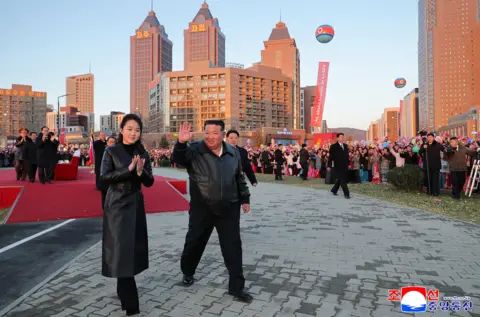
During threats directed at Seoul and promises to expand the atomic arms program, a central uncertainty lingered at the recent political assembly: could the supreme leader's 13-year-old child be designated as the successor?
While definitive news did not materialise at the event, it has ignited a significant conversation about the young girl's potential as the prospective leader of the 25 million nation, a government solely led by the Kim family bloodline.
Heightened Public Profile and Rumors
The girl has become progressively present in regime propaganda with her parent. Yet, much about her remains unknown. North Korea has never officially released her full name or stated her date of birth.
Her existence was initially made known internationally in 2013. Over the years, she is generally thought to be a teenager, in part on analyst reports.
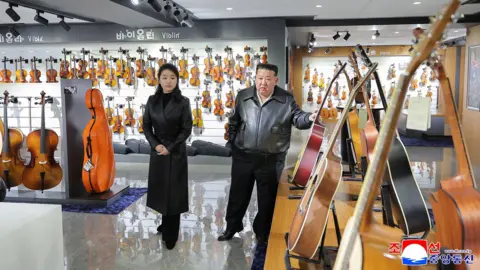
Signs of Succession
Observers point to several significant indicators. Her prominent appearances—frequently framed in the camera view—and the use of respected terms usually reserved for the supreme leader are seen as strong indicators.
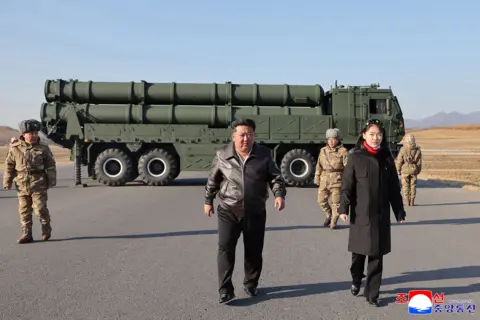
Furthermore, her familiarity with the army is viewed another important factor. She has inspected troops and weapons together with her father. On several occasions, top generals have been observed bending beside her to whisper at military displays.
"Official broadcasts is utilizing words set aside for the ruler. It underlines her own cult of personality," notes one prominent analyst.
Such strategic exposure is deemed vital, as ultimate authority in North Korea rests with command over the armed forces. To be a effective future leader, she must be seen as a competent commander.
Discussion Over Gender and Culture
Yet, a significant opposing view exists. Some experts contend that North Korea's profoundly patriarchal society presents an insurmountable barrier for a female ruler.
It is noted that females at all tier find it hard for equal treatment. Female commanders in top offices are exceptionally scarce. Everyday beliefs also reflect these norms.
"When it happens, they finish the ride then go to the rear of their car and expectorate three times to remove the misfortune," describes a one-time DPRK official.
Shifting Societal Norms
Alternatively, other observers suggest that the position of females in North Korea has changed notably since the 1990s famine.
Amid that crisis, as the official system weakened, females frequently became the key providers, pursuing informal business. This has apparently led to a perceptible shift in societal dynamics.
A researcher who has studied numerous former residents states that it is currently no longer unusual to see women in administrative positions within the country.

"We cannot analyze North Korea with Western framework. We must imagine them as the ancient kingdom," comments the researcher. "What person would dare defy someone of Paektu heritage who is ascending to the throne?"
Strategic Maneuvers
Recent political developments are also being scrutinized. The appointment of Kim Yo Jong, the leader's powerful sibling, to a key propaganda post is seen by some as a step to establish a mentor for the possible heir.
Ultimately, observers are split. Some see the spotlight on Ju Ae as a deliberate ploy to humanize the leader's reputation and normalize another dynastic succession. Others believe the signals of her preparation are too strong to dismiss.
Irrespective, the speculation itself may fulfill a function for the Pyongyang, keeping international focus firmly locked on the isolated Kim leadership.


